Ban Gioc Waterfall, Cao Bang: How to Get There and Where to Stay
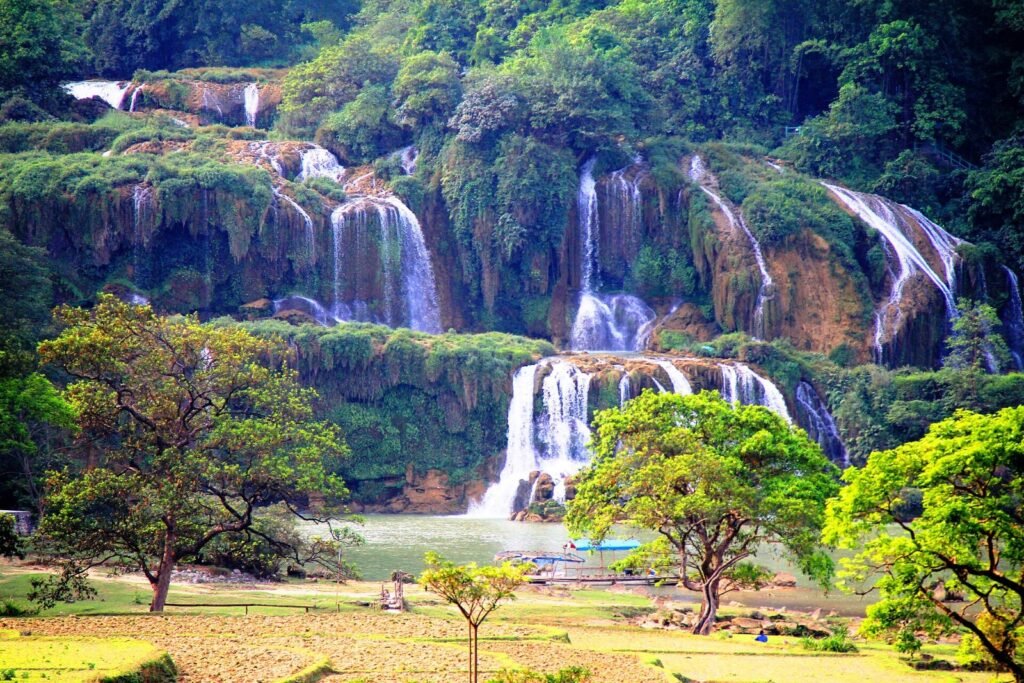
Ban Gioc Waterfall on the Quay Son River. Photo: Phương Huy, public domain, via Wikimedia Commons
Yes, if you have two or three nights to spare. Ban Gioc is Vietnam’s largest waterfall, set among rice fields and limestone peaks on the border with China in Cao Bang province. It is a long road trip from Hanoi, so it suits travellers who want countryside and village stays rather than a quick day out.
Gem Score
Why this score
How to get to Ban Gioc Waterfall
There is no airport or train in Cao Bang. Fly into Hanoi, then go by road. Tap a route.
- Land at Noi Bai International Airport (HAN), HanoiInternational arrival
Spend the night in Hanoi: most minivans to Cao Bang leave in the morning.
- Taxi or Grab to your pick-up pointOld Quarter or Opera House
Minivan operators collect from central Hanoi. Your ticket shows the exact address.
- Minivan (limousine van) to Cao Bang city5.5–7 hFrom 340,000 VND
Comfortable 9–11 seat vans with reclining seats. Most vans drop at Cao Bang bus station or at hotels in the city; ask when you book. Tickets: book online (12Go is the easiest in English; Vexere lists more local operators), through your Hanoi hotel, or at a travel agent. A day or two ahead is usually enough; book earlier for weekends and holidays.
Minivan times and fares
Trung Khanh Limousine departures listed for 2026. Other operators run from about 05:50 to 15:25, with 9–11 seat vans. Most pick up in Hanoi’s Old Quarter or at the Opera House; check your pick-up point when you book. Fares from 340,000 VND (US$13 / €12) one way (lowest fare seen 24 Oct 2026); most are US$16–30.Leaves Hanoi Arrives Cao Bang 07:25 12:55 09:10 14:40 09:40 15:10 10:10 15:40 10:40 16:10 12:10 17:40 12:55 18:25 - Local bus to Ban GiocAbout 2 hAbout 80,000 VND
Look for the minibus marked “Thác Bản Giốc”. Guides place its stop at Cao Bang’s main bus station near the market, or just opposite it east of the Bang Giang Bridge; ask at the station ticket desk. The bus ends at the waterfall. Tickets: pay on the bus or at the station desk; no need to book ahead. Going back: wait on the main road by the waterfall entrance and wave the bus down.
Local bus details
About 10 buses a day leave Cao Bang’s main bus station, near the market, between about 06:00 and 15:00. The ride takes about 2 hours over the Ma Phuc pass, and costs about 80,000 VND (US$3 / €3). Some buses stop in Trung Khanh town, about 20 km before the falls; from there take a motorbike taxi or ask your homestay to collect you. - Arrive at Ban Gioc WaterfallBus ends at the waterfall entranceStays 200–700 m away
Get off at the last stop, the Ban Gioc Waterfall entrance. The three stays we list are 200–700 m from the falls: walk, or ask your homestay to meet you.
- Taxi or Grab to My Dinh or Giap Bat bus stationHanoi
Most night buses to Cao Bang leave from My Dinh bus station in west Hanoi; some use Giap Bat in the south. Your ticket shows which.
- Night sleeper bus to Cao Bang cityLeaves about 20:00Arrives about 04:00
Lie-flat berths. Fares about 200,000–300,000 VND (US$8–12 / €7–10). Buses arrive at Cao Bang bus station, where the local buses to Ban Gioc start. Tickets: buy at the operator’s counter in the bus station, through your Hanoi hotel, or online on booking sites such as 12Go or Vexere.
- Morning local bus to Ban GiocAbout 2 hAbout 80,000 VND
Wait at the station or a café for the first buses from about 06:00. Look for the minibus marked “Thác Bản Giốc”. Guides place its stop at Cao Bang’s main bus station near the market, or just opposite it east of the Bang Giang Bridge; ask at the station ticket desk. The bus ends at the waterfall. Tickets: pay on the bus or at the station desk; no need to book ahead. Going back: wait on the main road by the waterfall entrance and wave the bus down.
Local bus details
About 10 buses a day leave Cao Bang’s main bus station, near the market, between about 06:00 and 15:00. The ride takes about 2 hours over the Ma Phuc pass, and costs about 80,000 VND (US$3 / €3). Some buses stop in Trung Khanh town, about 20 km before the falls; from there take a motorbike taxi or ask your homestay to collect you. - Arrive at Ban Gioc WaterfallBus ends at the waterfall entranceStays 200–700 m away
Get off at the last stop, the Ban Gioc Waterfall entrance. The three stays we list are 200–700 m from the falls: walk, or ask your homestay to meet you.
- Land at Noi Bai International Airport (HAN)International arrival
Some transfer companies collect straight from the airport.
- Private car with driver to Ban Gioc WaterfallAbout 330 km6–8 h
Ask the driver to drop you at the Ban Gioc Waterfall entrance or at your stay; the three stays we list are 200–700 m from the falls. Prices depend on the car size and whether you start at the airport or in central Hanoi. Split between a family or group, it can be good value.
Times and fares checked 28 Nov 2026 from operator listings and booking sites. Converted at 25,900 VND = US$1 and 29,500 VND = €1.
Getting around
Motorbike
Rented in Cao Bang city, fuel extra. Fill up before you leave: fuel stations are few on mountain roads. Experienced riders only, with a helmet and an international driving permit with your licence.
Car with driver
The easiest way to reach Nguom Ngao Cave and nearby villages with children or luggage.
On foot
Paved paths run along the river to the viewpoints. Khuoi Ky village is about 2 km from the falls.
Where to stay
Stay near the falls to see them early, before day visitors arrive. Only three places within 2 km of the waterfall are rated 8.0 or higher out of 10 by guests; all are listed below. Khuoi Ky village, just over 2 km away, has more homestays.
Sài Gòn – Bản Giốc Resort
8.0Pá Hideaway
8.9Điệp Homestay Bản Giốc
8.9Guest ratings /10 and prices from Booking.com, checked 29 Nov 2026. Price: 1 night, 2 adults, 12 Jan 2027, taxes and charges included. Prices change with dates. Distances are straight-line, as shown by Booking.com.
Where to eat
Choice within 2 km of the falls is small. Sài Gòn – Bản Giốc Resort and Pá Hideaway list an on-site restaurant on Booking.com, and there is one rated local eatery near the entrance road. For more choice, eat in Cao Bang city on the way.
Cơm phở Bích Diệp
4.0/5Vietnamese rice and phở dishes
Ratings from Google Maps, checked 29 Nov 2026. Distances are straight-line.
Things to do
Tap to open.
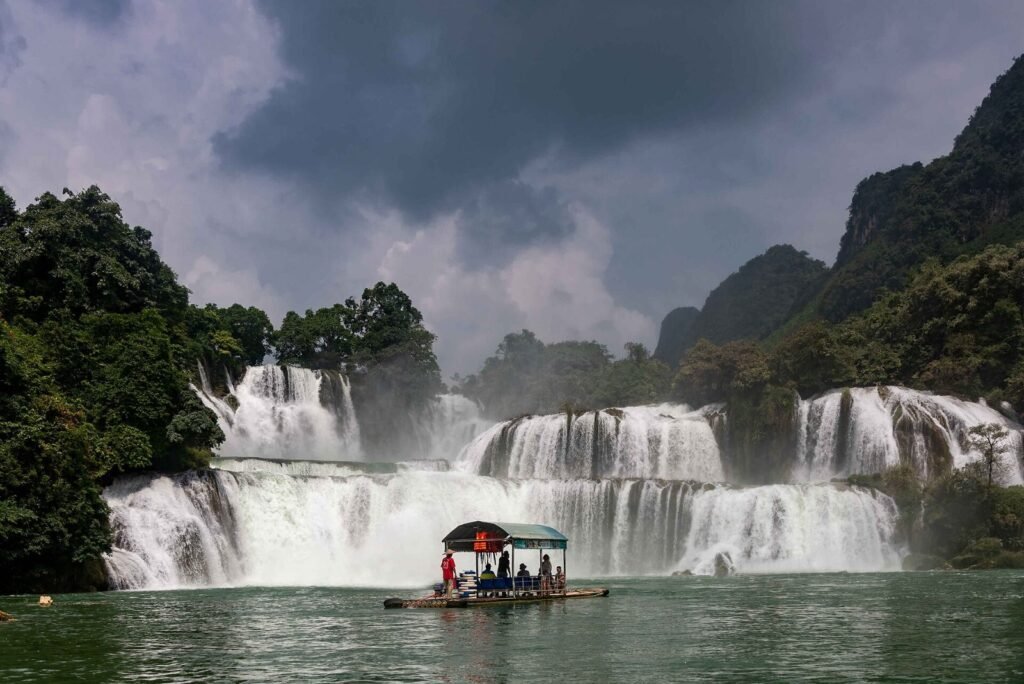
 Ban Gioc WaterfallVietnam’s largest waterfall
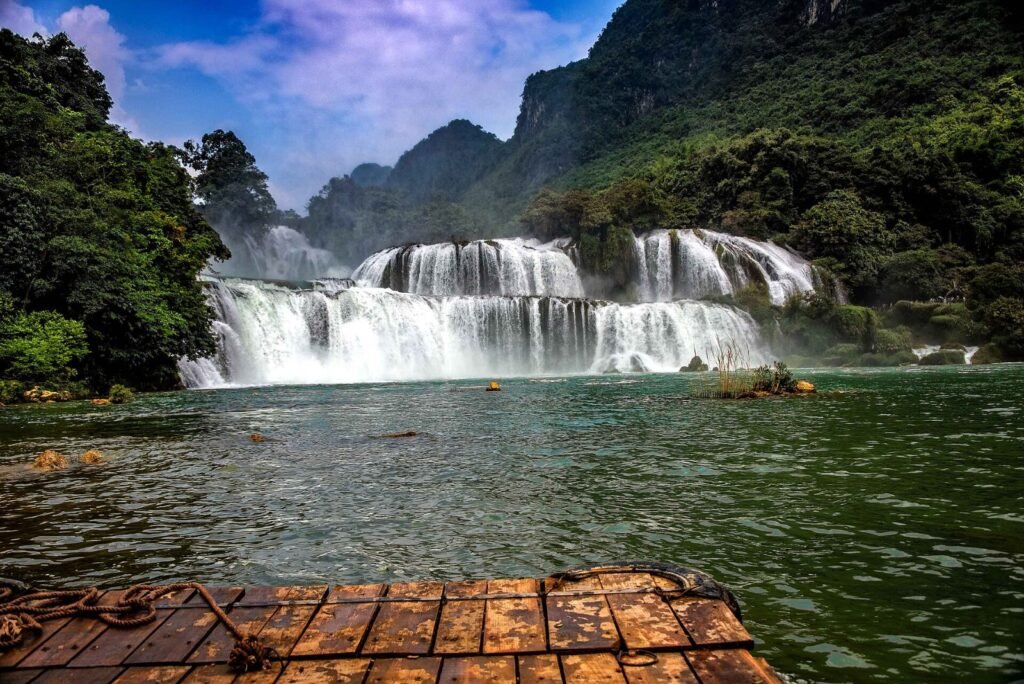
 Bamboo raft to the falls10–20 minutes, when water allows
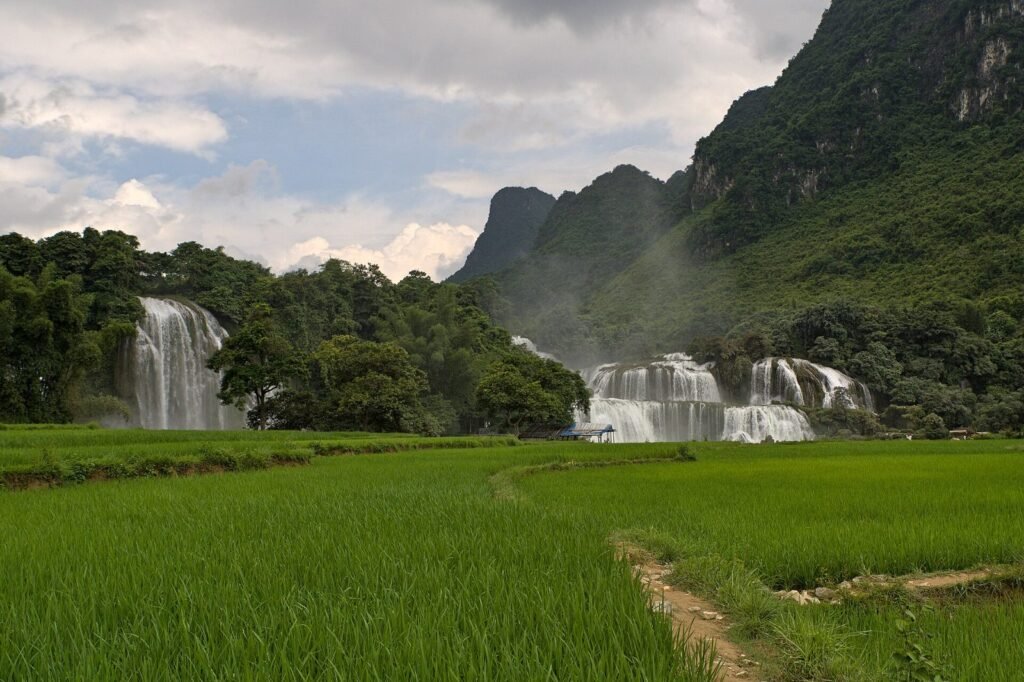
 Walk through the rice fieldsGold before the harvest
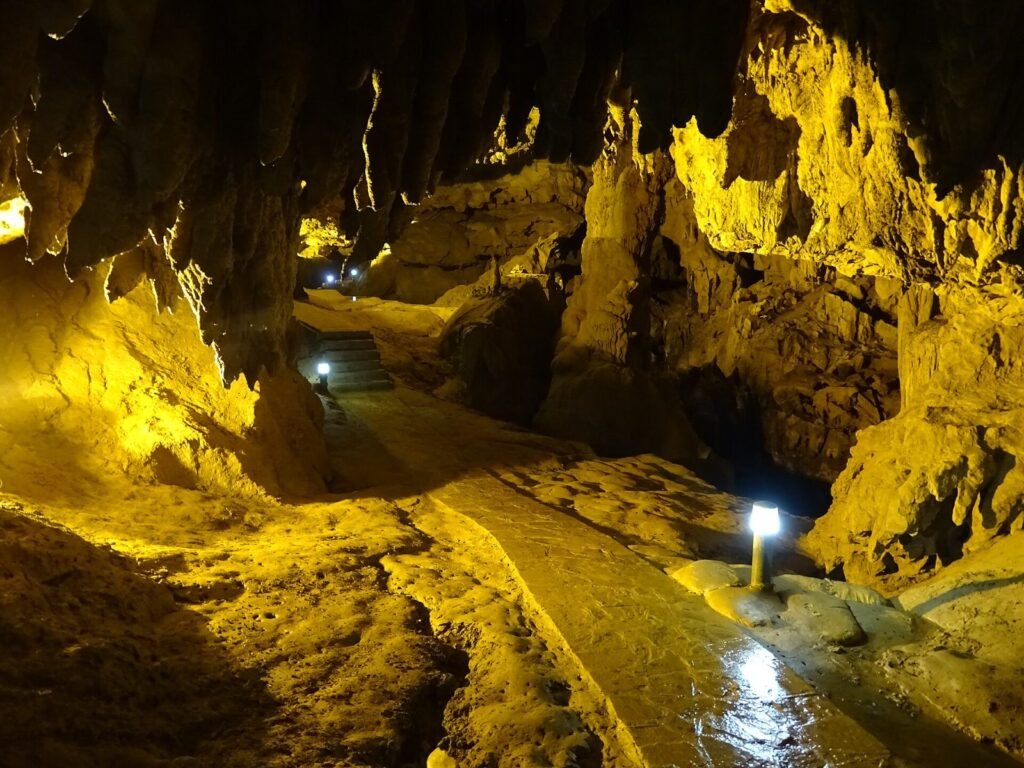
 Nguom Ngao CaveAbout 3–5 km from the falls
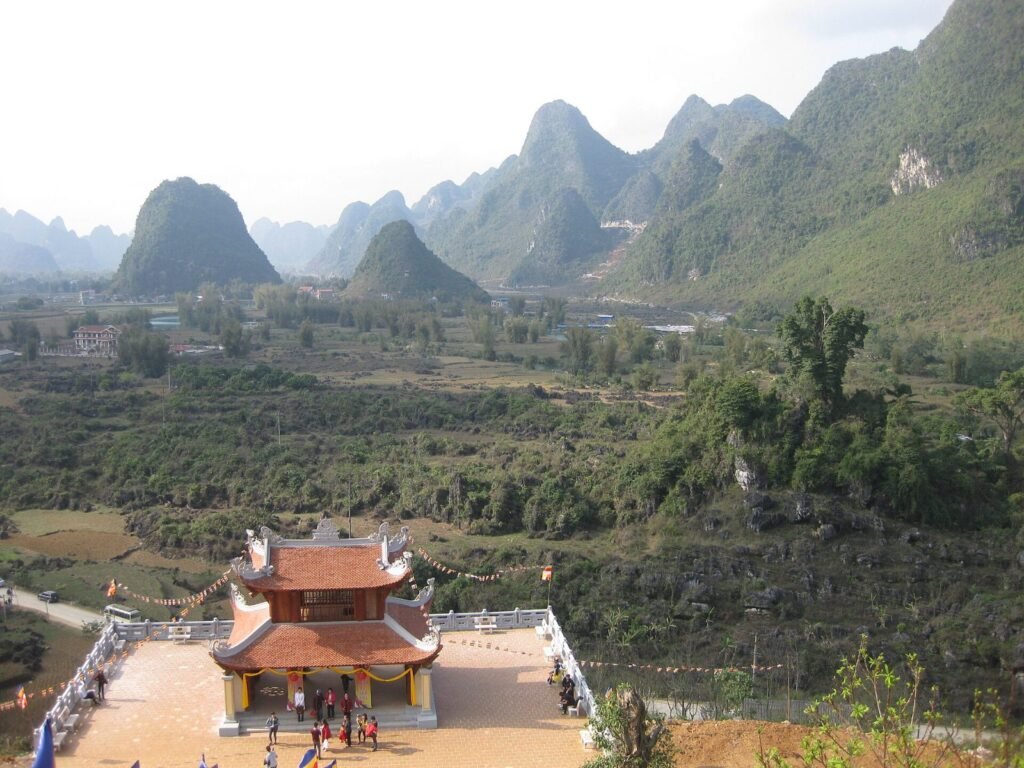
 Truc Lam Ban Gioc PagodaFree · views over the falls
 Tay village life at Khuoi KyAbout 2 km west of the falls
Best time to visit
Rainy season about May–September, when the falls are strongest but often brown, and roads can be hit by landslides. September to November brings clearer water, gold rice fields and drier roads. December to April is cool and dry, with much less water by February to April.
What things cost
Real prices we found, so you can build your own budget.
Room for two
US$42 at the resort by the falls, per night (Booking.com, checked 29 Nov 2026 for 12 Jan 2027).
Hanoi to the falls by bus
Per person, one way: day minivan to Cao Bang city from 340,000 VND, then local bus about 80,000 VND. By night bus instead: 280,000–380,000 VND in total.
Waterfall + raft
Ticket about 45,000 VND plus raft about 50,000 VND, per adult.
Converted at 25,900 VND = US$1 and 29,500 VND = €1 (Vietcombank, November 2026).
Visa and entry
UK, Switzerland, Norway and 18 EU countries: Germany, France, Italy, Spain, Netherlands, Belgium, Luxembourg, Denmark, Sweden, Finland, Poland, Czech Republic, Slovakia, Hungary, Slovenia, Croatia, Romania and Bulgaria.
USA, Canada and the other EU countries, such as Austria, Ireland, Portugal and Greece. Apply only on the official portal, evisa.gov.vn.
Your passport must be valid for at least 6 months after arrival. Carry it with you: hotels and homestays register foreign guests with the local police. Entry rules can change, so check your government’s official advice before booking.
Safety
- Official advice: the US rates Vietnam Level 1, “exercise normal precautions”. The UK does not advise against travel to any part of Vietnam. Both checked 28 Nov 2026. There is no single EU-wide travel advice, so visitors from EU countries should also check their own foreign ministry.
- Border area: the river at the falls is the border with China. Stay on the Vietnamese paths, do not fly drones, and follow any signs or instructions from border guards.
- Roads: the road from Cao Bang crosses steep mountain passes with tight bends. Ride or drive only in daylight, and take extra care in the rainy season, when landslides can close roads.
- Healthcare: the nearest medical centre is in Trung Khanh, about 25 km away; the provincial general hospital is in Cao Bang city. Make sure your insurance covers medical evacuation.
- Weather: tropical storm season is May to November, and heavy rain can swell the river quickly. Rafts stop when the water is too high.
Sources we checked
- UK Foreign, Commonwealth & Development Office: Vietnam travel advice
- US Department of State: Vietnam travel advisory
- Vietnam National Authority of Tourism: Official e-visa portal
- Vietnam Plus: Cao Bang visitors in 2025
- Vietnam News: Lao Cai visitors in 2025
- VnExpress: Cao Bang travel guide (tickets, motorbike hire)
- North Vietnam travel guide: Hanoi to Cao Bang transport
- Vietnam Tourism guide: Hanoi to Cao Bang fares, Oct 2026
- Vietnam Airlines: Nguom Ngao Cave
- Booking.com and Google Maps listings, checked 29 Nov 2026